TML KRAKÓW
The world of VR, lasers and magic
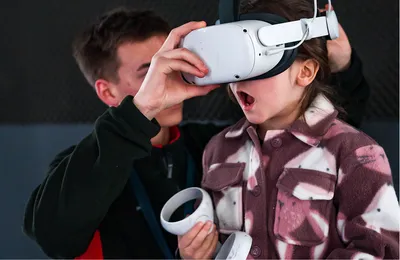
The story with the entertainment center began with solving internal tasks. Accounting and payroll are managed in Google Sheets, and for a long time, this format was sufficient. However, as data density increases, the spreadsheet interface begins to operate with noticeable delays.
The problem with slow tools lies in the accumulating friction. Losing a few seconds on every small action adds up to minutes and hours, and over years, it turns into days of lost time. Fatigue from such tools has a cumulative effect.
We developed bi-directional synchronization algorithms between Google Sheets and a Supabase database. On top of this, we designed and implemented an internal platform interface tailored to the center's specific needs. Employees kept working in their familiar spreadsheet format, while all information was instantly structured in a secure central database. Loading delays vanished.
Emotions for teenagers service for adults
Our focus shifted from internal tools to customer-facing products. We moved on to implementing the marketing website and the online booking system. We proceeded from the premise that teenagers, as a rule, make the decision to visit the center, while parents handle the booking and payment process. Therefore, the project combines two visual concepts. Vibrant, engaging blocks were designed for a younger audience, while a clean and intuitive process for selecting and paying for tickets was built for the comfort of adults.
The overall tone of the interface conveys the dynamics of virtual reality. The visual language is built on deep dark tones and neon glows inspired by a cyberpunk aesthetic. One technical challenge was creating an infinite 3D carousel for attractions. Each subsequent element visually recedes, creating the effect of looking between two mirrors—a direct nod to one of the center's main attractions, the "Infinity Room."
Beyond direct sales, the marketing website attracts new audiences through a multilingual blog. For managing publications, we integrated a full-featured text editor directly into the internal panel.
Guest distribution algorithm
The most significant part of this stage was the online reservation system architecture. The center has 9 attractions across 300 square meters. Two formats are available: private hall rentals for group events (such as birthday parties) and individual ticket sales. The system must account for both. If a time-based group package is booked, the hall closes to other clients. Otherwise, the algorithm distributes individual visitors among the 9 game zones to prevent queues.
To allow users to simply choose a time and pay, we wrote a standalone availability calculation. Internally, the system divides the workday into 15-minute intervals. When a large group books a slot, the program automatically staggers game starts across small adjacent intervals. This allows guests to start their sessions smoothly and avoid crowding.
Simultaneously, the system continuously calculates the load. It guarantees at least three available attractions at any given time, providing every new visitor with a choice. A simple click of the "Book" button triggers a detailed algorithm for even guest distribution across the physical space.
Autonomous architecture
Today, key service stages at this entertainment center are automated, and most of them function fully autonomously.
Payments go through Stripe immediately after booking. Data is recorded in a unified database, the client receives an automated confirmation via Brevo, and an event card is instantly created in the center's Google Calendar. Staff receive new guest notifications via a Telegram bot. For on-site payments, we implemented a POS module that allows for tracking all local financial operations.
The developed architecture took over the routine of calculations and notifications. We made interacting with the system simple and predictable, freeing up time for the staff to focus on their core work.